





























Why Do Cats Scratch Furniture? A Happy Cat Expert Explains!


For cats, scratching is a normal and natural behaviour that serves many functions. However, that doesn’t make it any less frustrating when your cat is scratching your carpet, sofa or walls.
If you're wondering why cats scratch furniture and how to prevent it, the good news is that scratching isn't your cat being naughty. In fact, it's an important part of how cats communicate and support their overall well-being.
In this article, we'll explore why cats scratch, why it’s so common and what you can do to redirect the behaviour to save your favourite furniture!
Why Do Cats Scratch Carpets and Furniture?
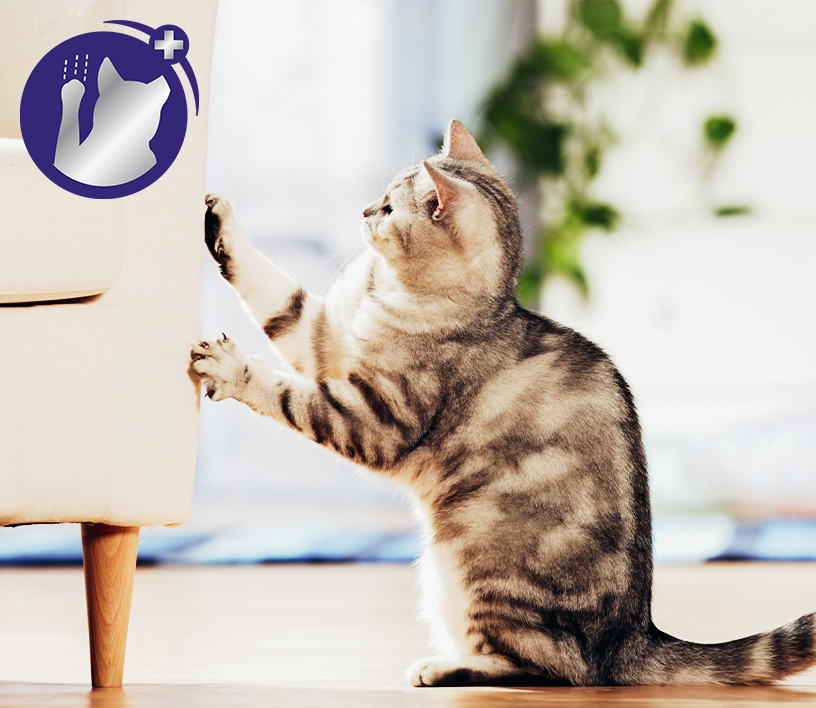
So, why do cats scratch furniture, carpets or walls? Cats scratching is an instinctive behaviour, and there are a few key reasons behind it, including:
-
Nail maintenance – cats have retractable, long claws that help them climb, defend themselves and catch prey. Scratching helps keep the nails strong, sharp and healthy.
-
Practice and strength – remarkably, a cat can sometimes support their entire body weight on just their claws. Scratching helps strengthen their claws and the muscles in the tips of their paws, helping to keep them from getting injured during their climbing escapades!
-
Scent marking – cats have scent glands in their paws and nail beds that leave behind a unique signature whenever they scratch. These lasting scent deposits are an important part of why cats scratch furniture, helping them mark their territory, feel safe and signal other cats to stay away.
-
Visual marking – along with leaving behind scent markers, scratch marks are visual cues to other cats, signalling that they might be entering another cat’s territory and to turn around or look out! This is also why yourcat might scratch the carpets or furniture in prominent areas of the home.
-
Stretching – our athletic little companions are ambush hunters, meaning they explode with activity for short periods. In other words, they are sprinters. And like any skilled athlete, they need a good stretch for their muscles to stay flexible and strong. Scratching can really help them get a ‘biiiiiiiiig stretch’ from their claws to tail.
Even though scratching is a very beneficial behaviour for cats to express, we still don’t want them turning our best furniture into a cat scratching disaster!

Common Places Cats Scratch
When choosing places to scratch, cats often choose surfaces to meet their physical and behavioural needs, like territorial instincts, claw maintenance, and physical stretching.
Some of the most common places you’ll find your cat scratching can include:
-
Furniture – Sofas, chairs, and beds often get scratched because they’re vertical, stable, and located in prominent areas.
-
Carpets and rugs – Horizontal textures appeal to cats who prefer a floor-level scratch.
-
Walls and doors – Vertical surfaces near territorial boundaries or high-traffic zones often attract scratching.
How to Stop a Cat Scratching Furniture?
It’s hard to communicate with our beloved cats sometimes. They speak a completely different language to us primates, and current research indicates that they have the cognitive capacity of a two-year-old. So how do you get a non-verbal “toddler” to STOP doing anything?
First of all, we give up on the ‘stop scratching’ request. If you’ve tried spraying water, yelling, clapping, or any other punishment-based method to stop your cat scratching, you’ll know that it either doesn’t work or only stops them temporarily. Not only is punishment an ineffective method for how to stop a cat scratching furniture, but it can also create conflict and fear in your relationship.
So, put down the spray bottle, take a deep breath and remember we are never going to completely stop cats from scratching. Plus, with all the benefits of scratching, we wouldn’t want to! Instead, let’s focus on giving them an acceptable outlet.

How Redirection Can Stop a Cat Scratching
Rather than trying to stop your cat scratching, it’s more effective to redirect their scratching away from furniture, carpets and walls and toward items they’ll find enjoyable to scratch that are acceptable for you.
The following is a cat’s ‘wish list’ of ideal scratching places and items:
-
Vertical vs horizontal scratching – cats may have a preference or happily use both if given the opportunity. Consider offering both vertical scratching pads and horizontal scratching pads to truly satisfy your cat’s urge to scratch.
-
Sturdy base – cats love to really scratch hard on items that are sturdy and secure, which is one of the reasons why cats scratch furniture. This helps to lift old nails, release their scent and get a gooooood stretch. Vertical scratching posts should be secure from top to bottom or have a wide base that is ‘topple-proof’. Horizontal scratching items ideally won’t move or lift as your cat scratches.
-
Variety of materials – the surface your cat scratches on may be a personal preference, or they may appreciate having multiple options. Rope or sisal is commonly attached to scratching posts, but carpet, soft wood and cardboard are also popular choices.
-
Location – where your cat is currently scratching is likely where they will prefer to scratch again. If your cat is scratching the carpet, for example, try placing a sturdy scratching post or sisal-covered drape over the area. If they are scratching in an obvious location, they are most likely visually signalling territory, so offer visible scratching locations. If they are scratching in discreet areas, offer scratching opportunities in quieter areas with less foot traffic.

How FELIWAY Can Help Stop a Cat Scratching Furniture
Pheromone products such as FELIWAY Optimum, which is a natural pheromone complex, can support cats that scratch furniture by helping them feel more secure and comfortable in their environment. When cats feel relaxed and confident, they are less likely to use scratching as a way of marking territory or relieving stress.
FELIWAY Classic Spray can also be useful to apply to the unwanted scratched areas directly. Simply apply directly to the surface your cat has scratched (ideally after gently washing the area first to remove any of the signature from their nail beds that they have left there). Always wait 15 minutes before allowing your cat near the treated area and never spray it on your cat.
Alongside this, don’t forget to praise and reward them every time you notice your cat scratching in a preferred location. Everyone responds better to encouragement than criticism, including our pets. The more we praise positive behaviour, the more likely they are to repeat it.
If you’d like to learn more about your cat’s behaviour and how to support their well-being, keep exploring the FELIWAY blog for expert advice and practical tips. While you’re here, don’t forget to sign up to our newsletter for the latest tips, advice and insights straight to your inbox!