
























What causes cat stress?


Cats can become stressed by changes to their environment, loud noises, unfamiliar people, conflict with other cats, travel, vet visits and disruptions to their daily routine.
Because cats are creatures of habit, they feel happiest when their surroundings are familiar, their daily routines are predictable and they have control over their environment. So, what causes cat stress?
Many things can make a cat feel anxious or unsettled, from loud noises and unfamiliar visitors to changes at home, conflict with other cats and even seemingly small disruptions to their daily routine.
The most common causes of stress in cats include:
- Loud or unexpected noises, such as fireworks or building work.
- Conflict with other cats in or around the home.
- Visits to the vet.
- Staying in a cattery or unfamiliar environment.
- Visitors and unfamiliar people.
- Introducing a new cat or pet.
- Travelling in a car or carrier.
- Moving house or changing their surroundings.
- Changes to furniture, scents or the home environment.
- Competition for food, water, litter trays and resting places.
- Changes to their daily routine.
- Boredom, lack of stimulation or underlying health problems.
Every cat is different, and something that unsettles one cat might not bother another. Understanding what causes stress in your cat is the first step towards helping them feel safe, secure and happy.
Cat's can be very discreet when it comes to showing if they are unhappy, take a look at these unhappy cat signs to watch out for.
Why do cats get stressed?
Cats rely on familiarity, routine and a sense of control to feel comfortable in their environment.
Unlike humans, who might enjoy a spontaneous change of scenery, cats can find unexpected changes unsettling. Even something as simple as moving furniture, introducing a new smell or changing where their food bowl is kept can disrupt their familiar surroundings.
To feel in control, cats will carefully mark their home with "happy messages" (or pheromones). Cats use pheromones to communicate with other cats and mark familiar areas. When your cat rubs their cheeks against furniture, doorways or your legs, they're leaving natural facial pheromone messages that help create a familiar and reassuring environment.
When these familiar surroundings change, your cat may feel less secure.
Cats are also naturally territorial and can be sensitive to unfamiliar animals, people, sounds and experiences. When they feel threatened or unable to access the things they need, they may start displaying signs of stress.
12 common causes of stress in cats
1. Loud and unexpected noises
Cats have very sensitive hearing, so sudden or unfamiliar noises can be particularly frightening.
Fireworks, thunderstorms, building work, loud music, vacuum cleaners and even household appliances can all cause some cats to feel uneasy.
The unpredictability of these noises can make it difficult for cats to feel in control of their surroundings. They may hide, become more alert than usual or try to find somewhere quiet and safe.
How to help: Provide a quiet hiding place where your cat can retreat when things get noisy. Keep windows and doors closed where possible and avoid forcing your cat to come out of their hiding spot.
Read our advice on helping your cat cope with fireworks fears.

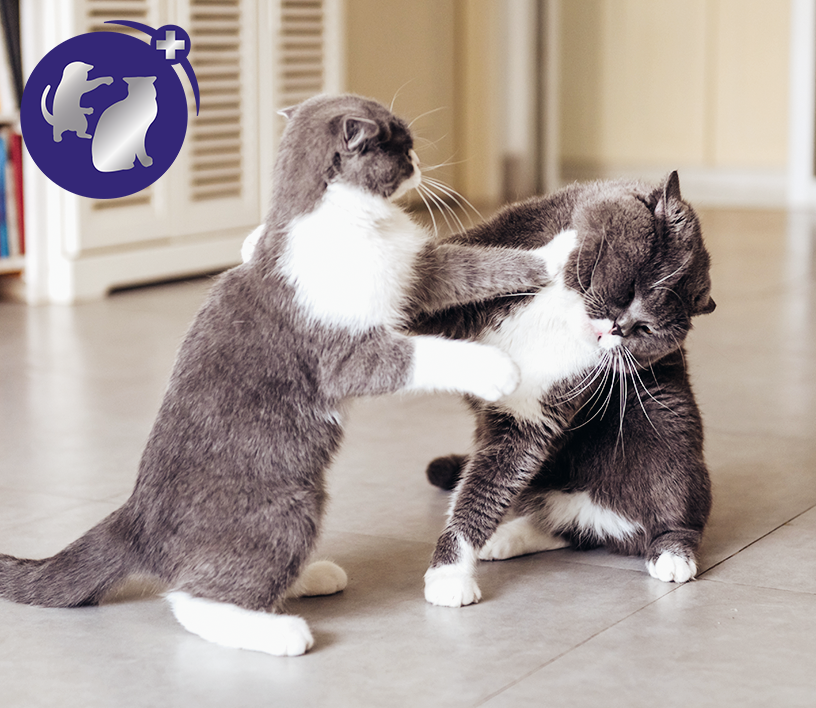
2. Conflict with other cats
Living with other cats doesn't always mean they'll become best friends!
Cats are territorial animals, and sharing their home with another cat can sometimes create tension, particularly if they feel they have to compete for important resources.
Conflict isn't always obvious. Cats might stare at each other, block access to doorways, prevent one another from reaching food or litter trays, or simply avoid spending time in the same room.
Even cats that appear to tolerate one another might be experiencing underlying tension.
How to help: Make sure every cat has access to their own essential resources, including food, water, litter trays, resting places and scratching areas. Provide multiple locations around the home so they don't have to compete.
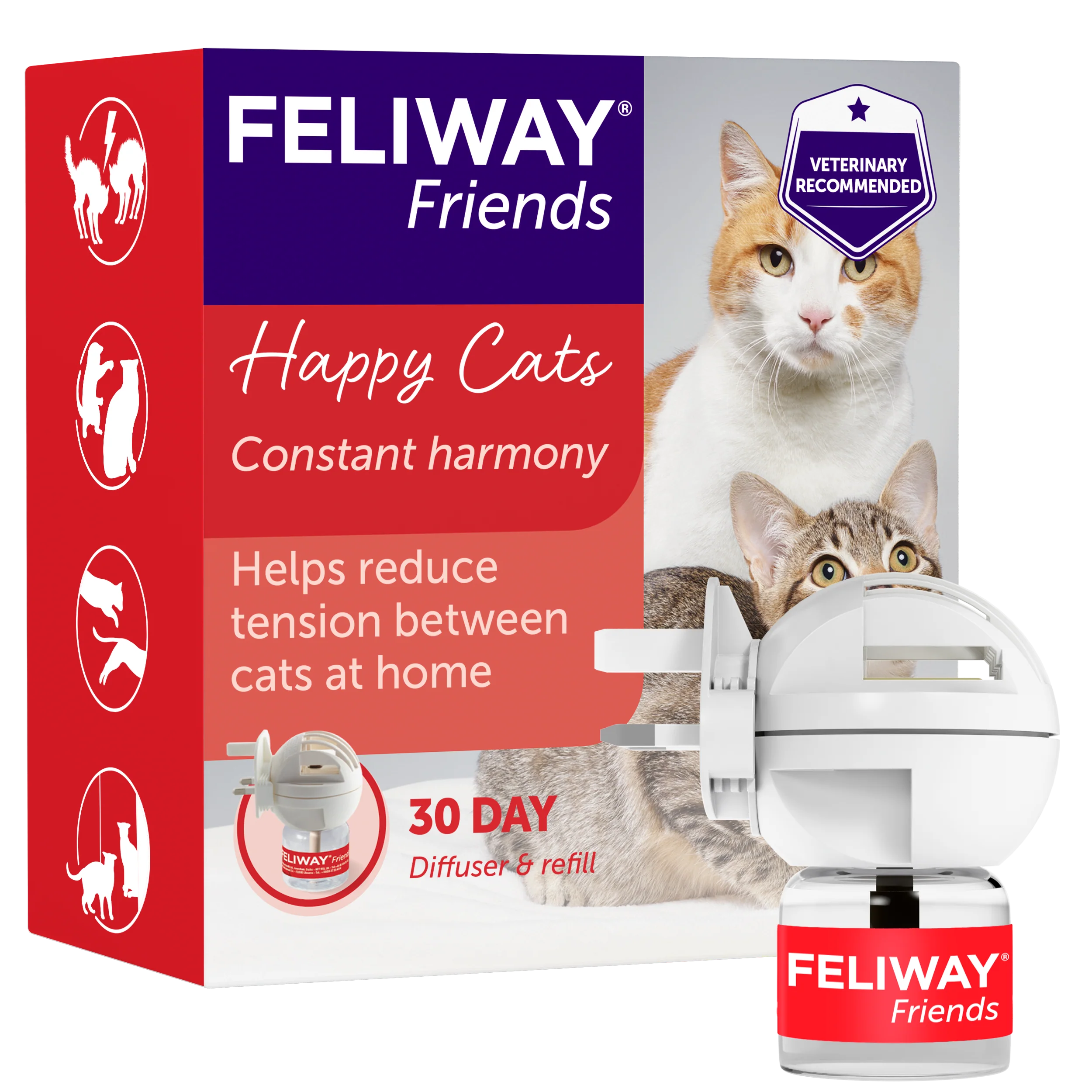
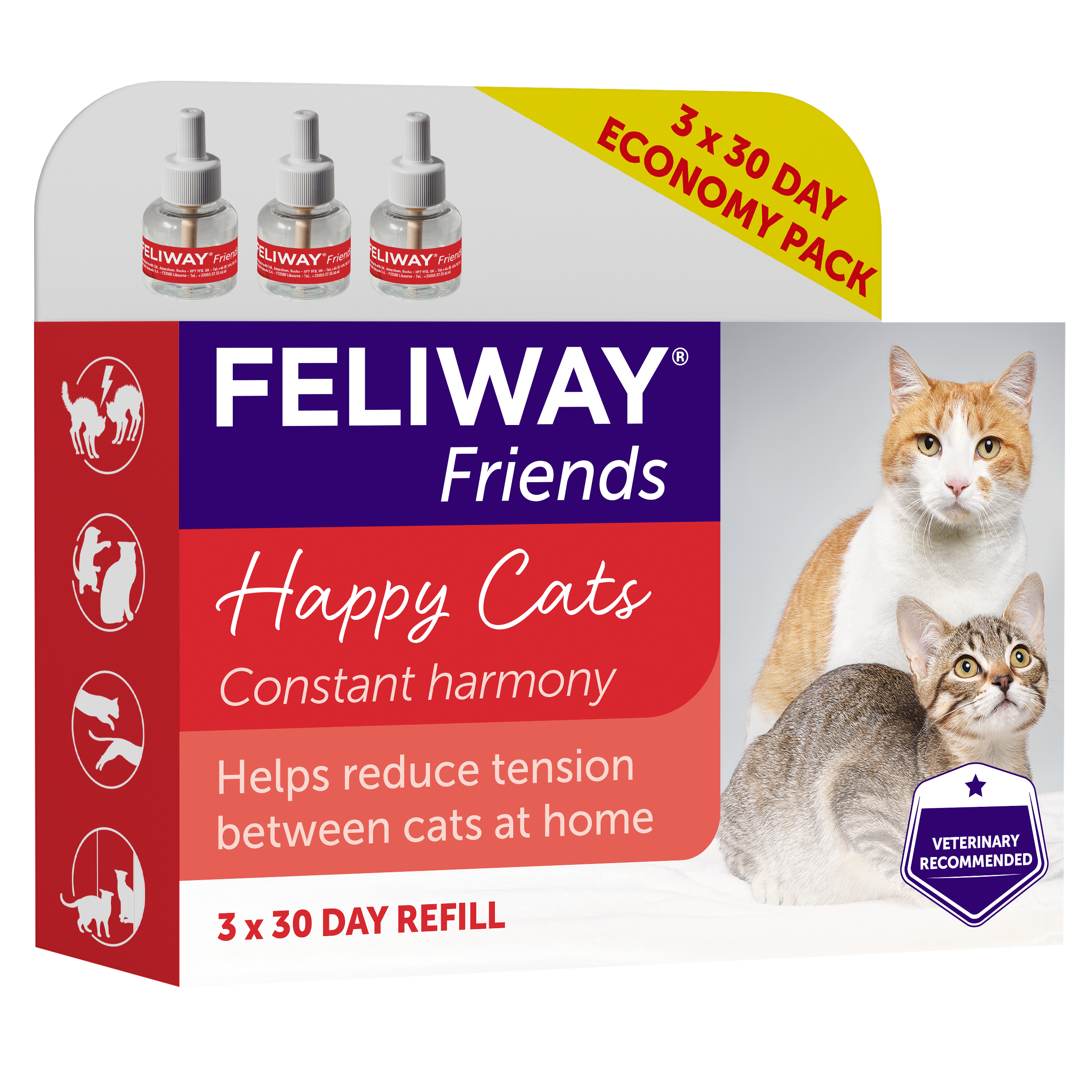
FELIWAY Friends is specifically designed to help reduce tension and conflict between cats living together.
Find out more about recognising signs of conflict between cats.

3. Visiting the vet
Although vet visits are important for your cat's health, they can be stressful experiences.
Your cat might associate the carrier with an unfamiliar journey, strange smells, other animals and unfamiliar people. They may also be worried about being handled or undergoing an examination.
For some cats, the stress starts as soon as they see their carrier!
How to help: Keep your cat's carrier somewhere accessible at home so it becomes part of their familiar environment. Encourage them to explore it voluntarily using familiar bedding and treats.
You can also use FELIWAY Classic Spray on their bedding or inside their carrier (following the product instructions) to help create a more reassuring environment during travel.
Discover our tips for taking your cat to the vet.

4. Staying in a cattery
Cats are individuals, and while some adapt quickly to new surroundings, others find being away from home particularly unsettling.
A cattery stay means leaving behind familiar smells, surroundings and routines. Your cat will also encounter unfamiliar people, sounds and potentially other animals.
Some cats may settle after a short period, while others might find the experience more challenging.
How to help: Choose a suitable cattery and make sure your cat has familiar bedding and belongings wherever possible. Keep their routine as consistent as you can and speak to the cattery about any particular needs your cat has.
Read our advice on helping your cat prepare for a cattery stay.

5. Visitors and unfamiliar people
Cats often prefer familiar people and predictable interactions.
When visitors arrive, your cat may be exposed to unfamiliar voices, smells and movements. Some guests might also want to pick them up or stroke them, even when your cat would rather be left alone!
This can make some cats feel uncomfortable or overwhelmed.
How to help: Give your cat the choice to approach visitors in their own time. Make sure they have somewhere quiet to retreat and ask guests not to chase, pick up or force interactions with them.
Find out why some cats don't like visitors.

6. Introducing a new cat or pet
Welcoming another pet into your home can be an exciting experience for you, but it can be a big adjustment for your existing cat.
Cats are territorial, and suddenly having to share their home, resources and familiar spaces with another animal can create uncertainty and tension.
Introducing cats too quickly can make this even more challenging.
How to help: Take introductions slowly. Start by allowing the cats to become familiar with each other's scent before gradually introducing visual contact and supervised interactions.
Give each cat their own space and resources while they adjust.
FELIWAY Optimum can help support cats during changes in their environment, while FELIWAY Friends is designed to help reduce tension between cats living together.
Read our guide to introducing a new cat to your home.

7. Travelling
Most cats prefer the familiarity of their home environment, so travelling can be an unsettling experience.
Car journeys expose cats to unfamiliar sights, sounds, movements and smells. Even a short journey to the vet can be challenging for some cats.
How to help: Make their carrier a familiar and comfortable place before travelling. Use familiar bedding, secure the carrier safely and avoid rushing your cat into it.
FELIWAY Classic Spray can also be used in the carrier to help create a more reassuring environment when travelling.
Discover our tips for travelling with your cat

8. Moving house
Moving house can be one of the biggest changes your cat experiences.
Cats build up a strong familiarity with their surroundings, including their favourite hiding places, resting spots and the scents around their home.
Packing boxes, moving furniture, unfamiliar people coming in and out and suddenly finding themselves in a new environment can all be unsettling.
Your cat may need time to adjust to their new surroundings.
How to help: Before moving, prepare a quiet room with familiar bedding, food, water, litter and somewhere to hide. Once you arrive, let your cat explore their new home gradually, rather than giving them access to everything immediately.
FELIWAY Optimum can help support your cat during changes to their home environment.
Take a look at these top tips to help when moving home with your cat.

9. Changes to furniture, smells and surroundings
You might not think twice about rearranging your living room, buying a new sofa or redecorating, but these changes can be surprisingly unsettling for your cat.
Cats use familiar smells and facial pheromone messages to help them recognise their territory. When furniture is moved, new items are introduced or strong cleaning products are used, their familiar scent environment can change.
DIY projects, renovations, new carpets and even moving their favourite scratching post can all disrupt their sense of familiarity.
How to help: Where possible, introduce changes gradually. Keep familiar bedding, scratching posts and resting places available and allow your cat time to explore new items at their own pace.
Try to avoid removing all their familiar belongings at once.
10. Competition for essential resources
Every cat needs easy access to food, fresh water, litter trays, scratching areas and comfortable places to rest.
In multi-cat households, competition for these resources can create tension and make some cats feel insecure.
Even if your cats don't physically fight, one cat might prevent another from accessing a favourite feeding area, litter tray or resting spot.
How to help: Provide enough resources for every cat, spread around the home rather than grouped together in one location.
A useful general guideline is one litter tray per cat, plus one extra, positioned in separate, accessible locations. Apply the same principle of choice and availability to other important resources.
11. Changes to their daily routine
Cats often appreciate knowing what to expect.
Changes to feeding times, your working hours, playtime or the amount of attention they receive can disrupt their familiar routine.
For example, returning to the office after working from home, going away for a holiday or changing your usual daily schedule might affect your cat.
Some cats will adapt quickly, while others may take longer to adjust.
How to help: Try to keep important parts of your cat's routine consistent, including feeding, playtime and opportunities for interaction.
If a change is unavoidable, introduce it gradually where possible.
12. Boredom, lack of stimulation or health problems
Cats need opportunities to express their natural behaviours, including exploring, climbing, scratching, playing and hunting.
If their environment doesn't provide enough stimulation, they may become bored or frustrated. This can be particularly relevant for indoor cats who have fewer opportunities to explore outside.
It's also important to remember that stress isn't always caused by something happening in your cat's environment.
Pain, illness or other underlying health problems can affect your cat's behaviour and wellbeing. A change in behaviour should never automatically be assumed to be stress-related.
How to help: Provide opportunities for play, exploration and mental stimulation. Interactive toys, scratching posts, climbing areas and puzzle feeders can all help enrich your cat's environment.
If your cat suddenly changes their behaviour, appetite or toileting habits, arrange a veterinary check to rule out an underlying medical problem.
How do you know if your cat is stressed?
Cats can be very good at hiding discomfort, so it isn't always obvious when something is bothering them.
Some cats become withdrawn and spend more time hiding, while others might display changes in their usual behaviour.
Common signs of stress in cats include:
-
Hiding more frequently or avoiding interaction.
-
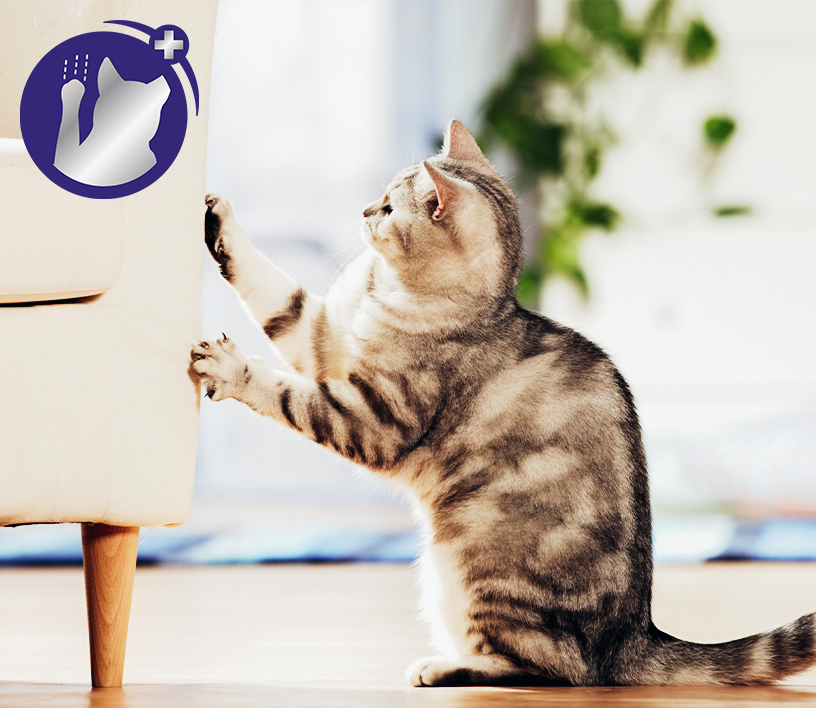
Scratching furniture, walls or other unwanted areas.
-
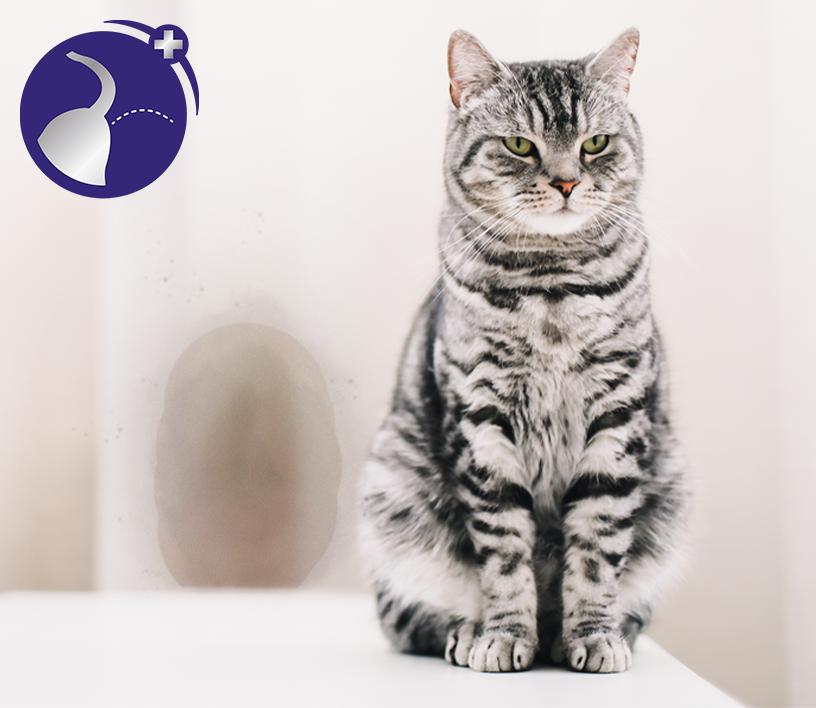
Urine spraying around the home.
-
Fighting or showing aggression towards other cats.
-
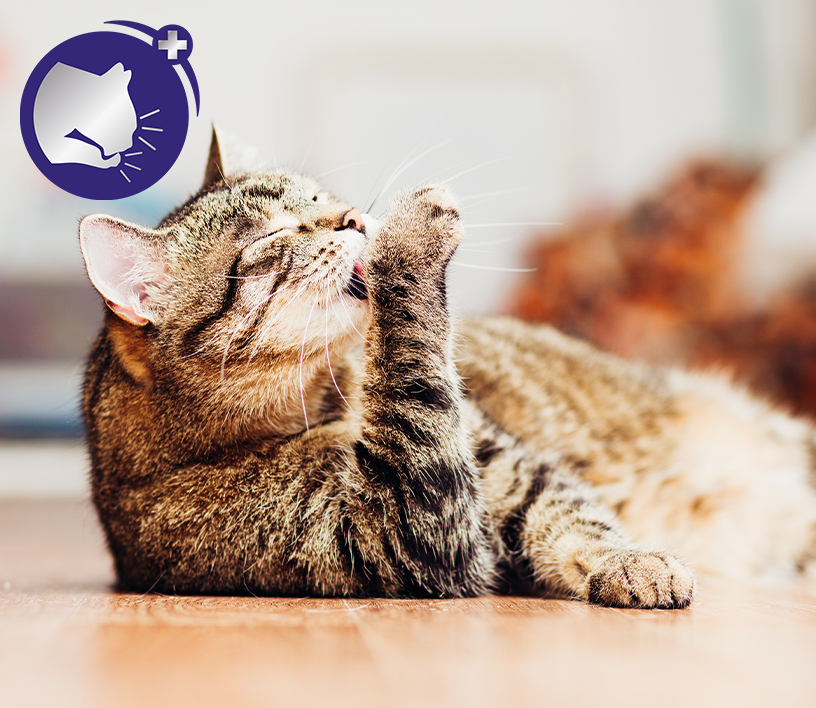
Overgrooming or excessive licking.
-
Eating more or less than usual.
-
Becoming unusually withdrawn or less playful.
It's important to remember that these behaviours can also have medical causes. If you notice a change in your cat's behaviour, speak to your vet to rule out any underlying health issues.
Find out more about the signs that your cat may be unhappy or stressed.
How can you help reduce stress in your cat?
Once you've identified what might be causing your cat stress, there are several ways you can help them feel more secure.
1. Keep their environment familiar
Try to maintain familiar surroundings, smells and resting places. Introduce changes gradually wherever possible.
2. Provide plenty of hiding places
Cats need somewhere they can retreat when they feel uncomfortable. Provide quiet hiding spots and elevated places where they can observe their surroundings.
3. Maintain a consistent routine
Try to keep feeding, playtime and other familiar activities as predictable as possible.
4. Make sure they have access to everything they need
Provide sufficient food, water, litter trays, scratching posts and resting places, particularly if you have more than one cat.
5. Respect their boundaries
Allow your cat to choose when they want attention. Never force them to interact with visitors, other pets or unfamiliar situations.
6. Consider additional support
FELIWAY uses feline pheromone messages to help create a reassuring environment for cats.
FELIWAY Optimum provides enhanced serenity messages to help reduce common signs of stress, while FELIWAY Friends is designed to help reduce tension and conflict between cats living together.
These products can be used alongside environmental and behavioural changes as part of a wider approach to supporting your cat.
Frequently asked questions about cat stress
What is the most common cause of stress in cats?
There isn't one single cause of stress that affects all cats. Changes to their environment, conflict with other cats, loud noises, unfamiliar people and disruptions to their routine are all common triggers. Every cat has different sensitivities.
Can changing furniture cause stress in cats?
Yes. Cats rely on familiar surroundings and scent markings to feel secure. Moving furniture, redecorating or introducing new items can change their familiar environment and make some cats feel unsettled.
Can cats get stressed by other cats?
Yes. Cats can experience stress when sharing their home with other cats, particularly if they feel they have to compete for food, water, litter trays or resting places. Tension can be subtle and doesn't always involve fighting.
Can stress make a cat stop eating?
Stress can affect a cat's appetite, causing them to eat less or sometimes more than usual. However, a loss of appetite can also indicate an underlying health problem. Contact your vet if your cat stops eating or you notice a significant change in their eating habits.
Can indoor cats get stressed?
Absolutely. Indoor cats can experience stress due to environmental changes, a lack of stimulation, competition for resources, unfamiliar visitors and disruptions to their routine. Providing opportunities for play, climbing, hiding and exploration can help support their wellbeing.
How long does stress last in cats?
It depends on the individual cat and what's causing the stress. Some cats may settle relatively quickly once a stressful situation has passed, while others may need more time and additional support. If signs of stress persist or worsen, speak to your vet or a qualified feline behaviourist.
How can I tell what is stressing my cat?
Look for changes in your cat's behaviour and consider anything that has recently changed in their environment or routine. Think about new people or pets, changes to furniture, loud noises, access to resources and interactions with other cats. Keeping a diary of when unusual behaviours occur can help you identify potential triggers.
Help your cat feel happier and more secure with FELIWAY
Understanding what causes cat stress is the first step towards helping your feline friend feel safe and comfortable.
Whether it's a change at home, an unfamiliar visitor, a trip to the vet or tension with another cat, recognising potential triggers can help you make changes to support their emotional wellbeing.
Remember, every cat is unique. By understanding their individual needs, providing a familiar environment and offering the right support, you can help create a happier home for your cat.