
































Why Do Cats Fight? Tips to Help Cats Get Along


Just like humans, cats each have their own unique personalities! As all cat lovers know, our cats are individuals with their own preferences and personality traits. Some cats are extremely friendly and sociable, whereas others are more independent - we all know a kitty who needs their alone time!
As a cat parent, you may notice that your cat is more cautious about being close to other kitties, while in other cases, a kitty friendship may develop easily. It can take months for a feline friendship to develop a feline friendship, so it’s important to give them time.
While some cats will grow to love each other, others might never become friends - and it's important not to force them! However, if your cats are fighting with each other, it’s crucial to understand why and how to help. In this guide, we’ll explore the main reasons why cats fight, what can cause conflict between cats and how to help them get along with practical expert tips.
Why Do Cats Fight?
There are many reasons why cats fight each other. Naturally, cats are very sensitive to their territory and all of the resources in this space. Having another cat in their territory can mean they feel unsafe and that their access to resources is threatened. They can show signs they are feeling insecure and stressed about this competition for space, resources, and even you!
Understanding the potential causes of conflict can help you recognise the reason for your cats’ behaviour. Common reasons can include:
-
Competition for resources – cats come from ancestors that spent most of their time living alone, so they naturally don’t like sharing. Limited access to resources like food and water bowls, litter trays and resting spaces can lead to tension and conflict.
-
Changes in routine – environmental changes like house renovations, new visitors, unfamiliar scents or even changes in the household routine can make cats feel insecure. If cats are also sharing their home with another cat, these changes can affect their social relationship by altering how they use and share their space. For example, visitors staying in your home may be stressful for your cats, but can also mean they have to share space differently, which may trigger conflict between cats.
-
Territorial behaviour – don't forget cats that are outside your home. Neighbourhood cats in your garden can also be a perceived threat to your cat even if they don't go outside themselves.
-
Redirected aggression – if a cat becomes frightened or frustrated by something, such as a loud sound or an outdoor animal, they may lash out at another cat in the house as a stress response.

Can Cats Learn to Get Along?
Yes, cats can learn to get along with each other but building a positive relationship between cats often takes time, patience and an approach that works at your cats’ own pace. When learning how to help cats get along, it’s important not to rush the process, as this can reverse any progress that might’ve been made!
While some may develop a close bond, others might simply learn to tolerate each other peacefully. If your cats are fighting with each other or struggling to get along, understanding why your cats are fighting is the first step. From there, you can then take practical steps to help your cats feel more comfortable and start the path to learn to live together more harmoniously.
7 Tips To Help Your Cats Get Along
1. Create A Safe Space For A New Cat
If you're bringing a new kitty home for the first time, leave them in their opened carrier so that they can investigate the new space on their own terms.
More cautious kitties may want to stay in their carrier for a while until they pluck up the courage to explore! Keep your new cat restricted to one room initially until they see the area as safe. This will help them settle in without being overwhelmed.
2. Give Your Cats Time And Space To Adjust
Whether you’re introducing a new cat or reintroducing cats that have been fighting with each other, giving them time and space to adjust is important.
While a new cat is restricted to their safe room, be sure to visit often. Schedule daily play sessions as well as times that you just quietly spend time with them to help your kitty bond with you.
It’s important to not force your cat to interact with you. They will come to you when they are ready! Be sure to still spend one-on-one time with all your cats at different times of the day. This will help keep your cats happy and relaxed while easing the introduction process.

3. Provide Separate Resources For Each Cat
Any new pet's safe haven should be filled with the things they like and need. As competition over resources can be one of the reasons why cats fight each other, make sure each cat has their own litter tray, food, water, toys, scratching object, and bedding.
Before you introduce cats, check that there are plenty of separate resources for your pets. Having one resource for each cat plus one extra is a good rule to follow in a multi-cat household.
4. Let Your Cat Explore Gradually
Once your new kitty is settled in their room - which may take a few days, a week, or more - you can open the door and let them explore the rest of the house! At first, make sure that any other cats are in a separate room so that they won't see one another but the exploration means they can still start to become familiar with each other’s scent.
New cats will often make short explorations before rapidly retreating to their safe haven! It's normal for your cat to be hesitant while they start exploring, so allow them to adapt at their own speed.
A gradual approach can help prevent stress and help them settle into their new surroundings.
5. Introduce Cats Gradually Using Scent
Getting cats used to each other's scents before they meet is a great method for helping them get along and can make sharing a space feel a little less overwhelming!
Swapping toys and bedding is an easy way to introduce each cat to the other’s scent before they meet. Place the bedding or a toy from the other cat in their room, allowing them to choose whether they want to approach and investigate it or not. When both cats seem comfortable with the other cat’s scent, you can look to move on to the next step.
The next step involves each cat being able to explore spaces that have the other's scent and can get familiar with each other! Again, making sure the other cat is safely confined to another room. It can seem like this takes a lot of time when you are excited for your cats to meet in person, but taking introductions slowly can help reduce the likelihood of conflict.

6. Supervise Your Cats’ First Meeting
It's important to be there to monitor when your cats first meet. Be sure that each cat has an easily accessible escape route so they can move away if they feel uncomfortable or threatened.
Start with each cat being able to see each other first, ideally with a barrier between them. Picking a time when both cats are feeling calm helps too. If your cats react calmly to seeing each other, you can build to bringing them closer and then removing the barrier. Food and play can seem like ideal distractions or positive activities at this time, but as these are often solitary activities for cats it is best to use other positive actions, such as stroking their cheeks. Use food treats, such as Happy Snack by FELIWAY after the meeting when each cat is back in their safe haven, so they can enjoy the treat without worrying about the other cat.
If your cats are unsure, or show signs of tension such as rigid posture, large pupils, hissing or staring, calmly guide them back to their own safe spaces. When repeating the meeting the next time, start at a lower intensity and build back up again, e.g. having them further apart, or reintroducing the barrier between them.
Remember, this process takes time and the key is not to worry, it may sometimes take longer than you think for a friendship to occur!
7. Create A Calm Environment With FELIWAY Optimum
Learning how to help cats get along starts with creating an environment where they feel safe and comfortable. A calming atmosphere helps support more positive interactions between cats. With the help of a FELIWAY Optimum diffuser you can create this. Use before introducing new cats, during first meetings, and for at least one month after they meet.
This diffuser can also help to calm kitties who have been in or are showing signs of conflict. Place a diffuser in each room where your kitties spend most of their time, especially at the start of the process, this will mean diffusers in different places when your cats are in their separate special areas. The diffuser sends calming messages of enhanced serenity and has been shown in studies to reduce tension between cats as well as reducing stress-related signs such as scratching household objects.
The length of time it takes a new kitty to settle in will depend on the temperaments of each cat, previous experiences, and how many other cats (or dogs) are in their new home. For some cats this could be two to three weeks but for others it can take several months, so be patient with your kitties! Even if your cats don't become best friends, these steps can help to prevent conflict between them which is better for their general well-being (no one wants to live feeling worried about their housemates every day). Read our expert tips for spotting and relieving tension between your cats for more advice.
What To Do If Your Cats Are Fighting
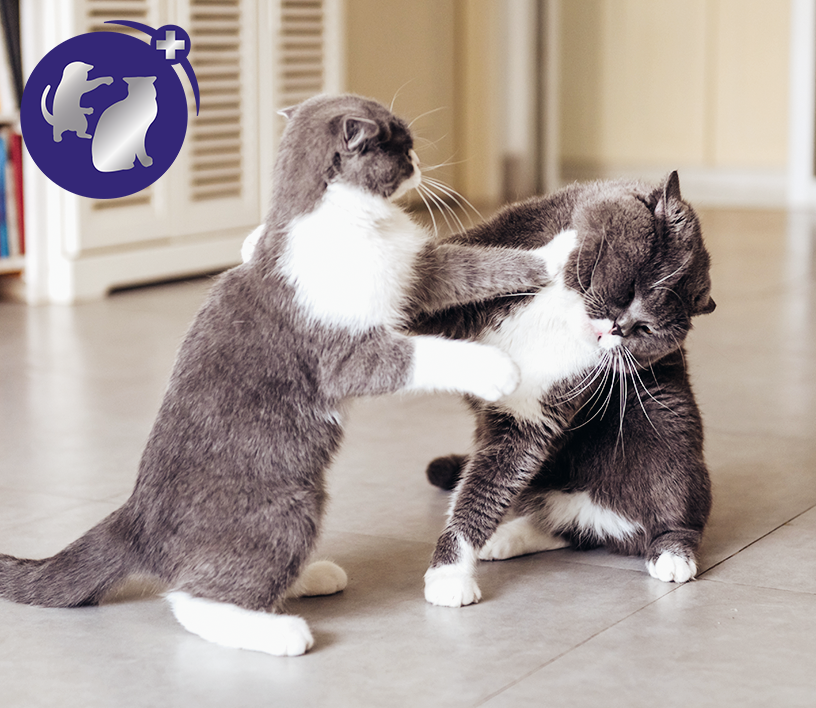
If your cats are fighting with each other, it’s important to stay calm and avoid putting yourself in the middle of the conflict. Trying to separate them with your hands can result in injury.
When trying to break up a cat fight, you should:
-
Avoid physically picking up or grabbing fighting cats
-
Use a distraction, such as a toy or sudden noise, to interrupt the interaction safely
-
Ensure each cat has their own separated space to calm down
-
Do not punish either cat
-
Check for injuries and contact your vet if needed
Once your cats are calm, the next step is understanding why they’re fighting and making changes to help reduce tension and prevent future conflicts. You may need to consider reintroducing them again following the steps as if one of them was a new cat.
If your cats have suddenly started fighting when they have previously been friendly towards each other, contact your vet, as it is possible one of them has an underlying medical issue which is impacting how they cope with social relationships.

Helping Cats Get Along Takes Time
Every cat relationship is different. While some cats become close companions, others may simply learn to live together and share a home’s space peacefully. Understanding why cats fight each other, recognising the signs of conflict and taking gradual, positive steps can help reduce tension and support a happier multi-cat home.
Explore more expert advice on understanding cat behaviour, recognising the signs of cat conflict and how to help cats get along in the FELIWAY blog. While you're there, sign up to our newsletter to receive the latest expert tips, advice and guidance straight to your inbox!